

“I don't think artistic and technical choices should be separated.” — Hyo-joo Yang
For writer-director Hyo-joo Yang, the conversations happening around Half Moon reach into the filmmaking itself: where to place the camera, how to divide a scene into shots and how the space around an actor shapes what we feel.
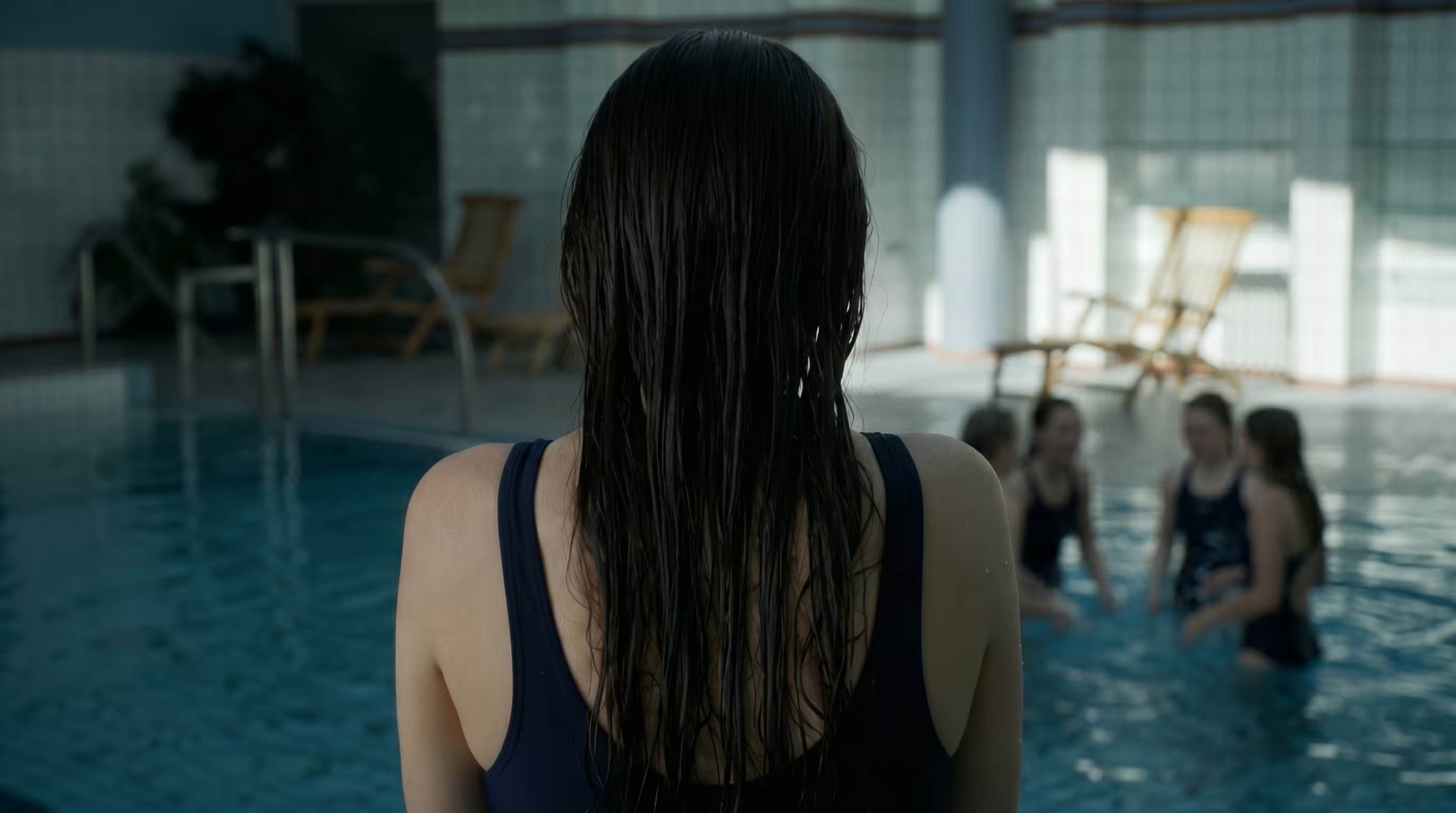
Half Moon is a coming-of-age drama co-produced by Utopai Studios with Germany’s In Good Company and Korea’s Paper Barn Studios. It follows a 13-year-old Korean-German girl and the aunt she barely knows through a fractured summer on a remote North Sea island.
We asked Yang about the collaboration, the role of AI in the production and what it takes to protect a film’s original ambition.
What do you need from a studio partner to feel supported in your creative vision?
Hyo-joo Yang:
When people work with AI, they usually focus only on what new things it can give us. However, I care deeply about real performances and the physical truth of filmed images.
Beyond just technical support, having partners who understand and believe in what we are truly trying to express gives me great confidence as a creator.
Where would you like to see the relationship between independent filmmaking and available resources change?
Yang:
Independent films often have to give up artistic possibilities because of financial limits. And honestly, the idea that limitations always breed creativity can be cruel and unfair.
When a director has to cut an entire scene because of money, not because of an artistic decision, the film's original ambition is damaged. Rather than just asking for a bigger budget, I want to see more flexibility in how independent films are funded and distributed.
Even within a tight budget, directors need the real freedom to choose what to keep and what to let go. I believe creating this kind of environment should come first.
That freedom depends partly on when production conversations happen. On Half Moon, Yang describes technical collaboration that begins while she is still imagining how a scene should look.
What becomes possible when filmmakers and technical teams develop ideas together early?
Yang:
I don't think artistic and technical choices should be separated. On Half Moon, we are trying a new approach: we film real actors on set, and then we use AI to extend the environment around them.
This is not just about making post-production faster or more efficient. It is deeply connected to how we see and create cinematic space. It directly affects core directing choices, like how to divide a scene into shots and how to build different layers of space in a frame.
For me, working with the technical team from the very beginning is not just a way to overcome limitations. This experience changes not only how we make an image, but also how we imagine it in the first place.
At Utopai, this connection between creative intent and technical decisions informs our approach to production intelligence. We’re building toward production infrastructure that carries a filmmaker’s decisions through planning, image-making and revision. Yang’s example makes the need concrete: a decision about extending an environment can influence how you plan and shoot the scene.
What does meaningful creative control look like when AI becomes part of production?
Yang:
AI can create highly impressive images, but a technically impressive shot and a shot that is right for the film are two completely different things.
No matter how much technology develops, the heart of cinema is still the actors' performances and the atmosphere of a real set. That is why, on this project, we use AI strictly as a tool to extend our spaces.
When AI produces something unexpected and interesting, the director must judge whether it truly fits the film's context. For me, real creative control means not getting swept away by the speed of technology, but staying focused on the ultimate goal of the movie.
How do you judge whether a new tool or technique is helping you tell the story?
Yang:
I have one main rule when evaluating a new technology: Does it push the audience out of the film, or draw them deeper into the story?
Half Moon follows the subtle anxiety and tension of a young girl within ordinary, everyday spaces. For this reason, technology becomes meaningful only when it blends into the characters' emotions rather than drawing attention to itself.
The rabbit sequence we are currently testing is a good example. In this fantasy sequence, a dead rabbit comes back to life to grant Yeri’s wishes, capturing the exact moment she discovers the hidden depth within herself.
When reviewing this scene, my focus is not on how impressive or surprising the result looks, but on whether it naturally belongs to the universe of our film.
The sequence is still being tested. What Yang gives us here is her standard for judging it: whether the image belongs to Yeri’s emotional world. That is a specific creative question for the production team to work toward.
What would you like more studios to understand about supporting filmmakers and original stories?
Yang:
Making an original film, especially an arthouse film, is not a race with a clear answer at the finish line. Even when you know what you want to create, it takes a long time of wandering and experimenting to find the exact images and forms to express it.
Asking studios to give directors the freedom to experiment and fail might sound a bit unrealistic. However, I believe that if studios can balance the demands of efficiency with a little more room for uncertainty and flexibility, many more diverse and vital art films will successfully make their way to the screen.
For us, that is a responsibility worth carrying into the infrastructure we build. Supporting a filmmaker means making room to test an idea, understand why it matters and keep working until the image serves the story.
お知らせを受け取る
ストーリーテリングの未来を、あなたの受信ボックスへ。


