Filmmakers have always adopted new technology to expand what they can put on the screen. Nonlinear editing changed how films are cut; digital cinematography changed how they are shot and reviewed; visual effects and virtual production made once-impractical images possible.
Generative AI is becoming the next major evolution in that production landscape.
For Utopai Studios, the opportunity is not to remove filmmakers from the process. It is to give them new capabilities: technology that can help develop shots, explore more creative possibilities, iterate faster and bring complex ideas to the screen with greater control.

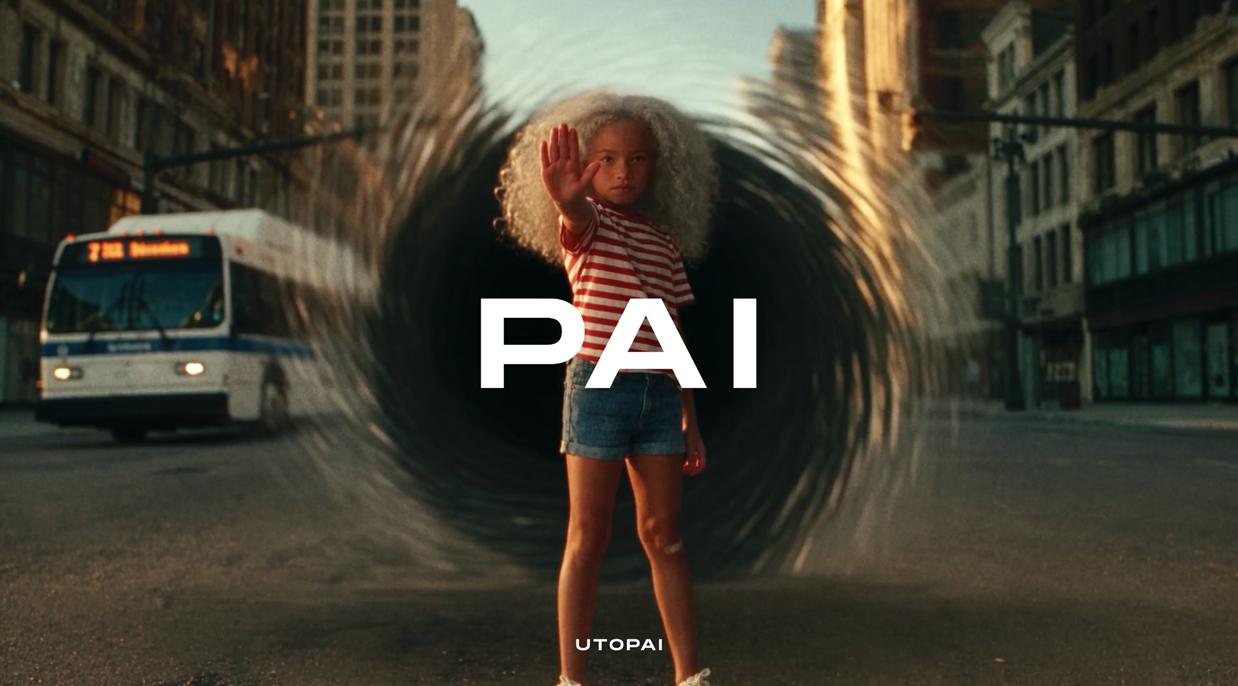
That philosophy is behind the all-new PAI, Utopai Studios’ production intelligence platform, and Utopai X, its video generation model. Developed inside an operating film and television studio, the technology is being built around the demands of professional production — with the broader goal of creating a production intelligence system for filmmakers, studios and production partners.
Utopai Studios has grown into the world’s largest independent AI-native film and television studio, with a $1 billion valuation. That scale allows Utopai Studios to develop its technology while testing and refining it inside real productions.
“Technology is most useful when it gives filmmakers more control over their ideas,” says Zijian He, chief scientific officer of Utopai Studios. “Our goal is to give artists the ability to explore more possibilities, iterate faster and make creative decisions with the same level of intention they bring to every other part of production.”
At the center of that system is Utopai X. The model is particularly strong in areas that remain challenging for generative video systems, including reflections, caustics, world understanding and high-level spatial consistency. Those capabilities matter because light, objects, characters and cameras need to behave coherently within a three-dimensional environment.
That performance has now received significant independent validation. Utopai X has reached No. 2 globally on Artificial Analysis’ Text-to-Video Leaderboard With Audio, with an Elo score of 1,150. It trails No. 1-ranked Wan 3.0 by nine points. The result also makes Utopai X the highest-ranked model from a U.S.-based company on the leaderboard.
Artificial Analysis uses blind human-preference testing: Viewers compare videos generated from the same prompt without knowing which model created them. Those preferences determine the leaderboard’s Elo scores.
For Utopai Studios, the No. 2 ranking provides independent validation that the generation technology underlying PAI is competing at the forefront of the global video market. But model performance is only part of the equation.
A feature film can contain hundreds or thousands of shots. Characters, environments, performances and production choices need to remain coherent as the project evolves. Directors also need to make precise changes while preserving creative decisions already approved.
PAI is designed to bring those decisions into a shared production environment. A screenplay can be broken into scenes and shots while characters, locations, objects and visual references remain connected to the project. Utopai Studios’ Production Assistants — AI agents within PAI — use that context to help filmmakers plan shots, develop ideas and create iterations. The filmmaker decides what to create, keep or change.
Utopai X operates directly inside that environment. A filmmaker can develop a shot in PAI, select Utopai X to generate footage and compare multiple takes without leaving the production workspace. Previous versions remain available as the work develops, and selected footage can move into an editing timeline and ultimately into established post-production environments.
The broader aim is to make production intelligence a core layer of professional filmmaking — connecting advanced models, production context and filmmaker-led workflows within the systems production teams already use.
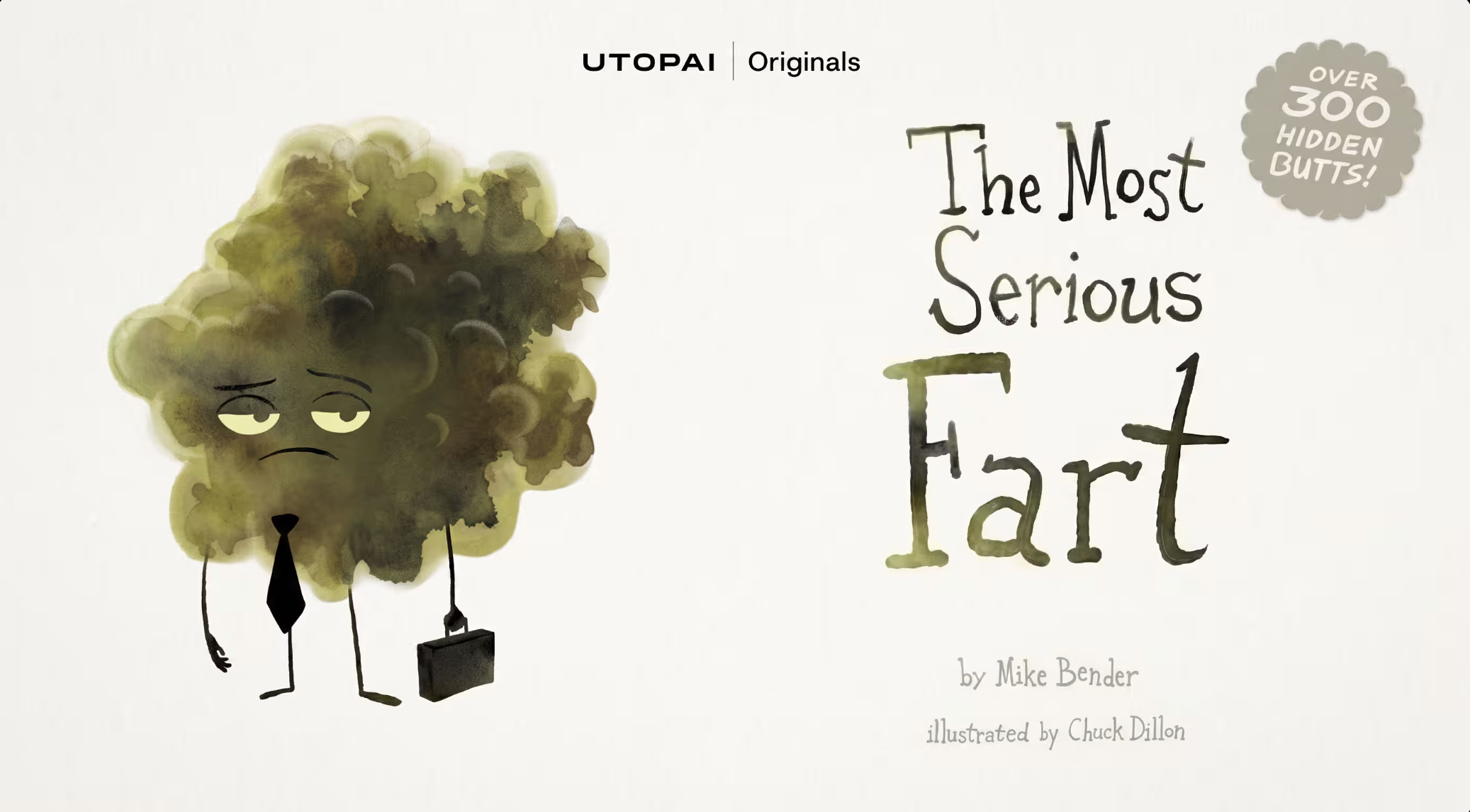
Utopai Studios is already applying that approach to “The Most Serious Fart,” its upcoming animated feature written and directed by Mike Bender.
Because PAI and Utopai X are being developed within Utopai Studios, the filmmakers and artists making the movie can shape the technology around actual production needs — challenges that are difficult to reproduce in a research environment.
Those challenges feed directly back into the technology. Real productions generate proprietary production data and expert feedback. Utopai Studios’ technology teams use that knowledge to improve models, agents and workflows. Those improvements can return to the production and carry forward into future projects.
Over time, Utopai Studios believes that combination — professional filmmakers, proprietary production data, models and agents, and an AI-native production pipeline — can create a compounding advantage.
Utopai Studios also sees that experience as a foundation for partnerships beyond its own slate. Rather than positioning PAI as another standalone AI product, Utopai Studios is looking to work with strategic partners across film and television to bring production intelligence into established professional workflows.
With Utopai X ranked No. 2 globally — and as the highest-ranked model from a U.S.-based company on Artificial Analysis’ Text-to-Video Leaderboard With Audio — Utopai Studios has independent validation for the generation technology underlying its production system.
The larger ambition extends beyond model rankings. Utopai Studios wants to establish production intelligence as a new layer of professional production infrastructure, connecting advanced models, project context and filmmaker-led workflows across the process of making a film or series.
Utopai Studios’ goal is for PAI to become the defining platform for that category — developed alongside professional filmmakers, shaped by real productions and designed to help studios and creators produce more ambitious work at greater scale.
For Utopai Studios, the opportunity is bigger than building another AI product. It is to help establish production intelligence as a fundamental part of how professional film and television get made.
Get notified
The future of storytelling, in your inbox.