
The Professional’s Guide to AI Video Directability
Why multi-turn editing is the missing link between “generated clips” and real storytelling
Most AI video tools behave like slot machines. You pull the lever, you get a clip, and if something feels off, you pull again. That model works for short-form experimentation, but it does not work for directors.
PAI was built specifically to solve that problem.
At Utopai, we define AI video directability as the ability to guide a story forward across scenes, without losing character identity, spatial coherence, or narrative intent. Directability is not about generating one impressive shot. It is about sustaining a cinematic sequence.
That distinction is what separates a generator from a professional filmmaking model.
The real problem with standard ai video generation models: clips are easy, sequences are hard
AI video has reached a point where producing a cinematic-looking clip is no longer the technical barrier. With the right input, you can generate strong lighting, fluid motion, and believable characters within seconds. The breakdown happens when you try to build a story.
Multi-shot storytelling is where most models start to drift. You adjust pacing and the composition shifts. You refine a performance and the face subtly changes. You regenerate a shot and the environment reinterprets itself. Across three or four shots, the world stops feeling like one continuous place.
For narrative filmmaking, that instability is fatal. Cinema is not a collection of moments; it is continuity sustained over time. AI video directability is what makes that continuity possible.
What directability requires in practice
Directability means being able to revise performance, motion, composition, and pacing at the frame level or full-video level, without restarting the surrounding sequence. If directability is the goal, the model must be built around three structural priorities: long, cinematic, and editable.
Not long as in “slightly longer clips,” but long as in sustained narrative sequences. Not cinematic as in “looks dramatic,” but cinematic in the way camera language, blocking, and spatial logic actually behave. And not editable as in “regenerate and hope,” but editable at the level of performance and composition without collapsing the scene.
Long: built for multi-scene narrative
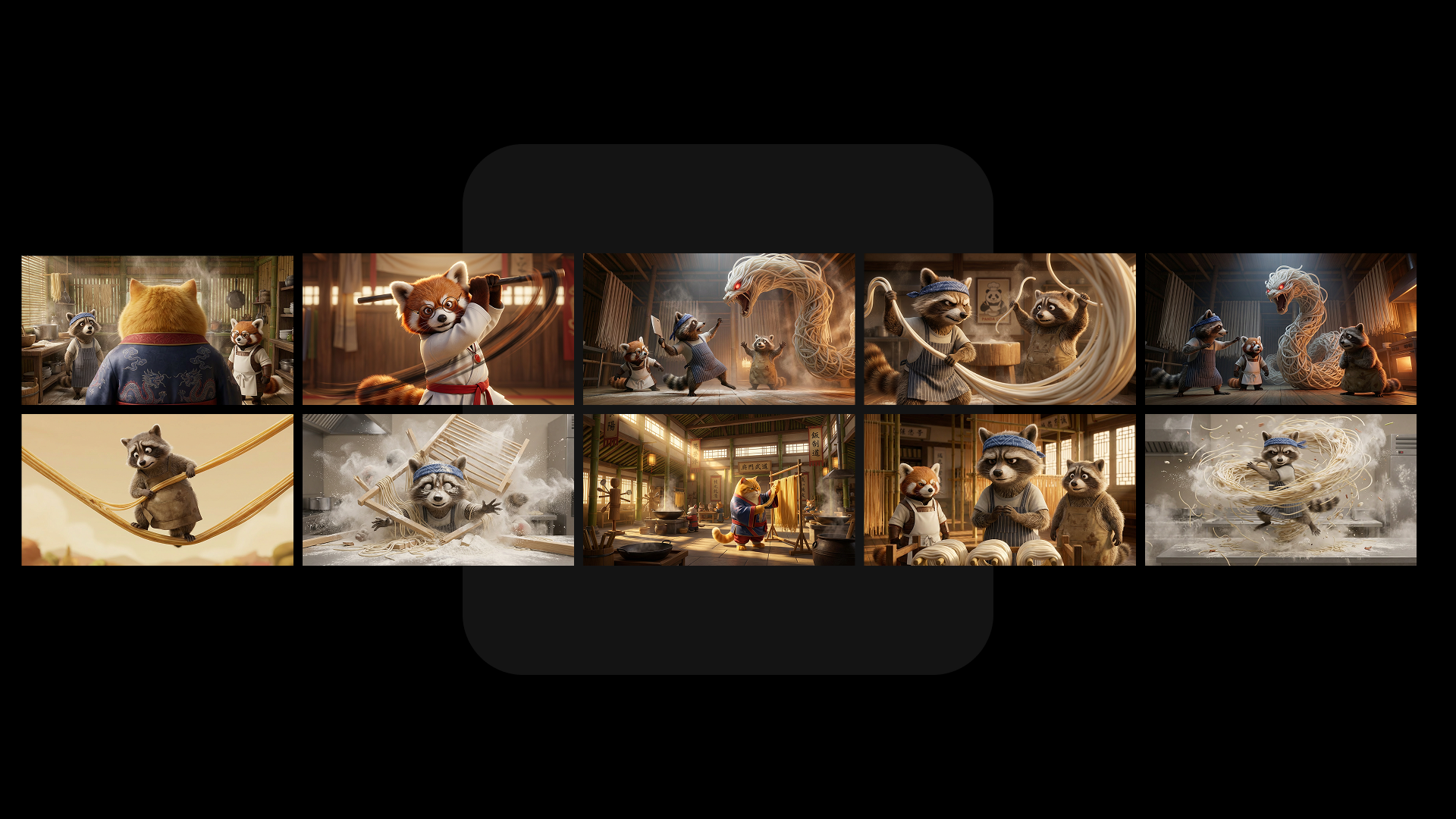
Long-form storytelling requires continuity across scenes, not just within a clip. AI video character consistency must persist. Environments must remain stable. Visual language must hold together across multiple angles.
PAI is optimized for multi-scene narrative sequences up to one minute in length, supporting up to 16 shots within a single structured flow. That matters because the unit of work is not a lucky clip; it is a sequence. Its narrative continuity architecture maintains character identity and environmental coherence across shots. Once a character is defined, that identity persists. Once a world is established, its geometry and visual language remain stable.This eliminates the most common failure mode in AI video: identity drift across scenes.
Without sustained continuity, long-form storytelling collapses. With it, stories can scale.
Cinematic: grounded in filmmaking logic
Cinematic quality is not just about lighting or surface realism. It is about shot logic. Real filmmaking depends on framing decisions, lensing logic, spatial blocking, and coverage that serves narrative intent. Camera movement must respect geometry. Blocking must preserve relationships in space. Tone must evolve across scenes.
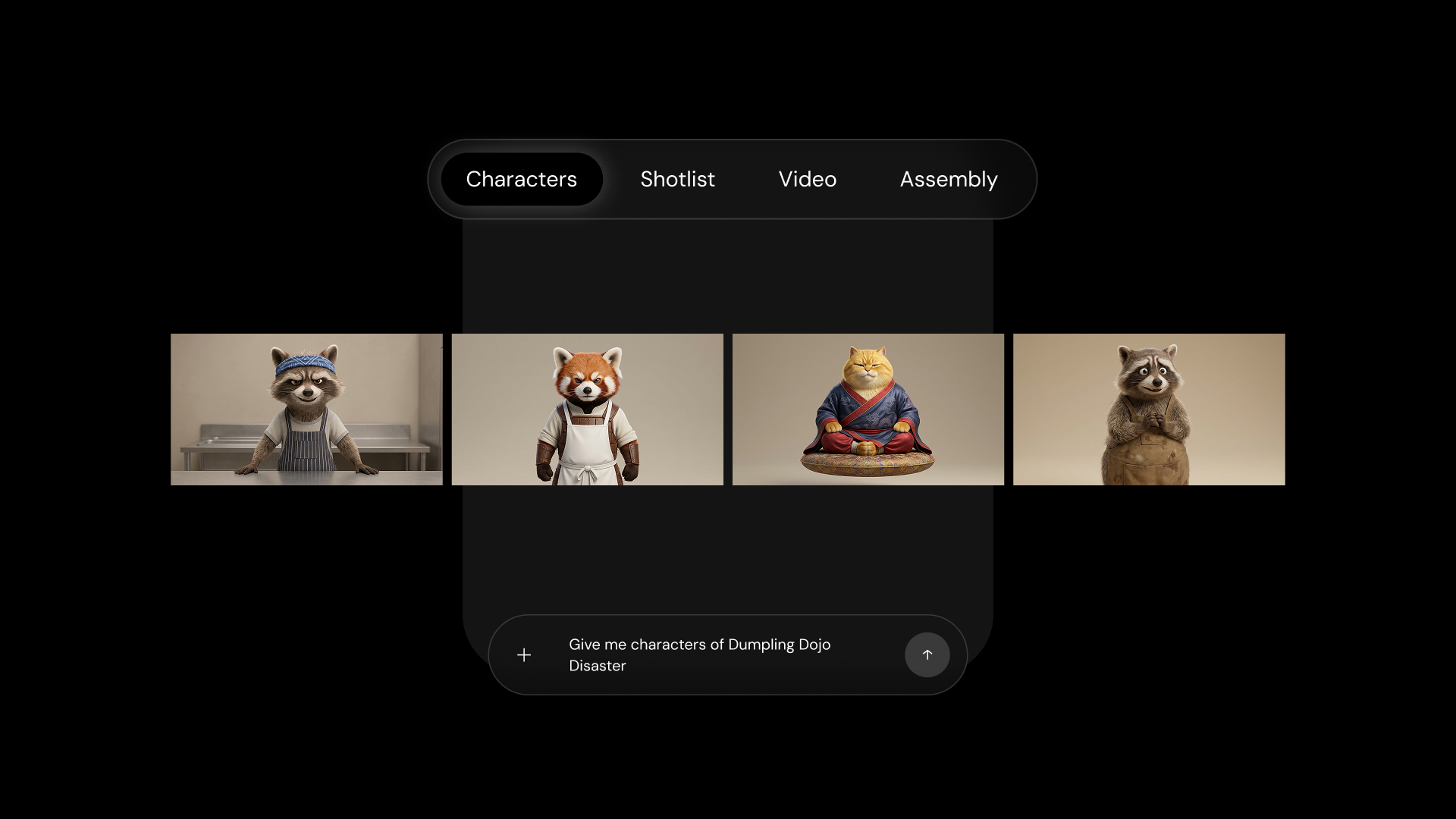
PAI is built around a script-driven workflow. The system reads narrative structure first, then proposes shot logic inside that structure. Camera type, angle, and composition are treated as filmmaking controls, not vague prompt suggestions. It supports cinematic motion and structured shot creation within a single coherent sequence, preserving visual language from scene to scene. The goal is not aesthetic randomness. It is narrative coherence.
That is what makes the output cinematic rather than merely impressive.
Editable: story-level editing control
Editability is where directability becomes tangible. In professional workflows, revision is constant. A performance is softened. Timing is tightened. Composition is refined. But the surrounding narrative structure does not reset.
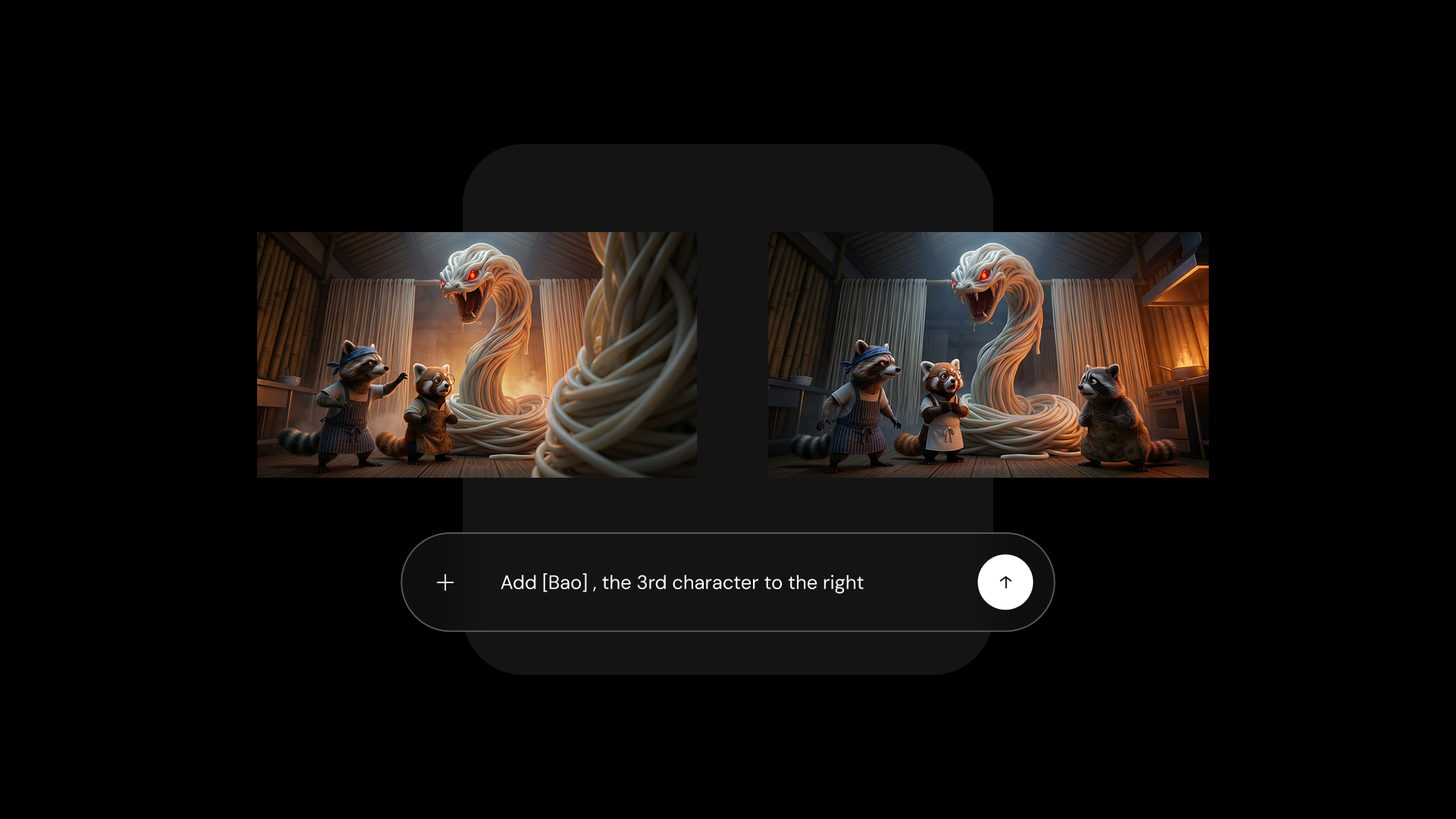
PAI supports story-level editing control at both the frame level and full-video level. Creators can revise performance, motion, and composition without restarting entire sequences. Edits do not trigger a full creative reset.
This is enabled through multi-turn natural language interaction within the same workflow. The model carries context forward so changes compound toward a single creative objective rather than fracturing it. This transforms revision from a gamble into a controlled process.
Without this level of AI video editability, you don’t have directing. You have regeneration.
How multi-turn workflows feel in practice
A directable system behaves more like a creative collaborator than a black box. You do not rewrite prompts from scratch whenever something feels off. You guide the system forward in natural language and even reference images:
“Shift the key light left while preserving the low-key mood.”
“Hold the set layout from the previous shot, but tighten the framing.”
Because the system carries context forward, each tweak compounds toward a single creative target instead of fracturing it. Revision becomes a controlled process rather than a gamble.
End-to-end coherence
Directability also depends on workflow integrity. PAI supports an end-to-end story-to-video pipeline inside a single system. Narrative development, character persistence, shot creation, refinement, and final output live within one structured environment. That continuity reduces fragmentation and preserves creative context from script to final cut. It also outputs production-ready assets, up to 4K resolution, designed for professional delivery.
Equally important, PAI includes workflow-level safeguards that block generation against copyrighted IP, protected characters, and the likeness of public figures. The system generates original worlds and characters, reducing the risk of infringement when developing narrative IP for public release.
Directability without authorship clarity is incomplete. Sustained storytelling requires both.
A filmmaking model, not a slot machine
If you evaluate AI video the way directors do, the questions shift:
- Can I sustain character identity across 12 shots?
- Can I refine performance without losing blocking?
- Can I preserve spatial coherence across scenes?
- Can I move from script to sequence without collapsing continuity?
- Can I export something production-ready?
If the answer is no, you don’t have a professional filmmaking model.
PAI was designed as a cinematic storytelling engine, built for long-form narrative, structured shot logic, story-level editing control, and sustained continuity across scenes.
The future of AI filmmaking will not be defined by who can generate the most impressive single clip. It will be defined by who can carry a story forward. And that requires directability.
See how multi-turn editing preserves continuity across shots, and how directable AI changes the way stories are built.


Get notified
The future of storytelling, in your inbox.
